


Send Message
Privacy statement: Your privacy is very important to Us. Our company promises not to disclose your personal information to any external company with out your explicit permission.
 Changzhou Jianzheng Rubber & Plastic Products Co., Ltd
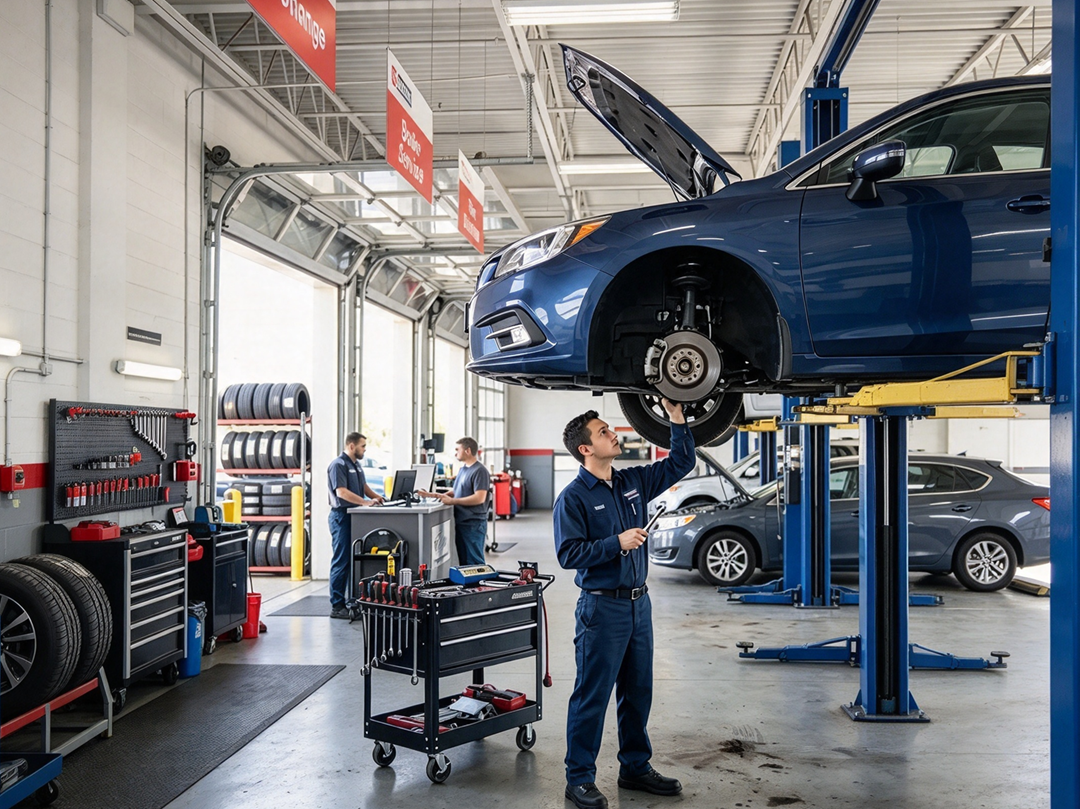
Chassis repair is not simply a matter of “replace whatever is broken.” Shock absorbers, springs, top mounts, and automotive rubber bushing are interrelated within the suspension system. When one shock absorber fails, the other side is often approaching the end of its service life as well; once bushings age, symptoms such as abnormal noise, pulling, and looseness over bumps frequently appear together. Replacing only the lowest-priced single component may mask the fault in the short term, but it often leads to repeated shop visits and secondary repairs over time. The technical threshold of chassis repair lies in diagnosis first, matching second, and installation last—not in offering a sufficiently low quote first.
Low-price competition also exposes a mismatch between equipment investment and talent supply. Some shops have already installed chassis testing and removal/installation equipment, yet there remains a shortage of technicians who can operate the equipment proficiently, judge system-level relationships clearly, and carry out standardized installation. Equipment can be purchased, but diagnostic experience and installation practices require time to accumulate. When low prices become the main competitive tool, it becomes harder for technically oriented shops to recover their investment in equipment depreciation, site costs, and technician training, and service supply further concentrates on low-threshold parts replacement. If a Shock Absorber Bushing has aged but only the shock absorber is replaced, or if a bushing has cracked but only surface treatment is performed, the short-term savings often reappear in the form of rework and reputational loss.
From an industry perspective, low-price traffic generation is not inherently unworkable; the key is whether a closed service loop can be formed after the low price. If the low price is only an entry point and value is recovered afterward through testing, matching, and standardized installation, it remains reasonable. If the low price becomes the entirety of the offer, shops can only compress parts quality, simplify procedures, and reduce diagnosis, leading to lower equipment utilization and accelerated technician turnover, ultimately weakening the service capability of the entire chassis repair market. For repair businesses, low prices can attract customers, but technical capability retains them; for the industry, what is needed is a mechanism that assesses parts prices and service value separately.
Competition in chassis repair should ultimately not remain at the level of who quotes lower, but should return to diagnostic accuracy, parts matching, and installation standardization. Parts prices can be transparent, but service capability cannot be replaced by a single low-price quote. Judging system-level relationships clearly, matching replacement plans correctly, and stabilizing installation quality are the scarce capabilities in the chassis repair industry that deserve proper pricing.
Email to this supplier

Privacy statement: Your privacy is very important to Us. Our company promises not to disclose your personal information to any external company with out your explicit permission.
Fill in more information so that we can get in touch with you faster
Privacy statement: Your privacy is very important to Us. Our company promises not to disclose your personal information to any external company with out your explicit permission.