

Send Message
Privacy statement: Your privacy is very important to Us. Our company promises not to disclose your personal information to any external company with out your explicit permission.
 Changzhou Jianzheng Rubber & Plastic Products Co., Ltd
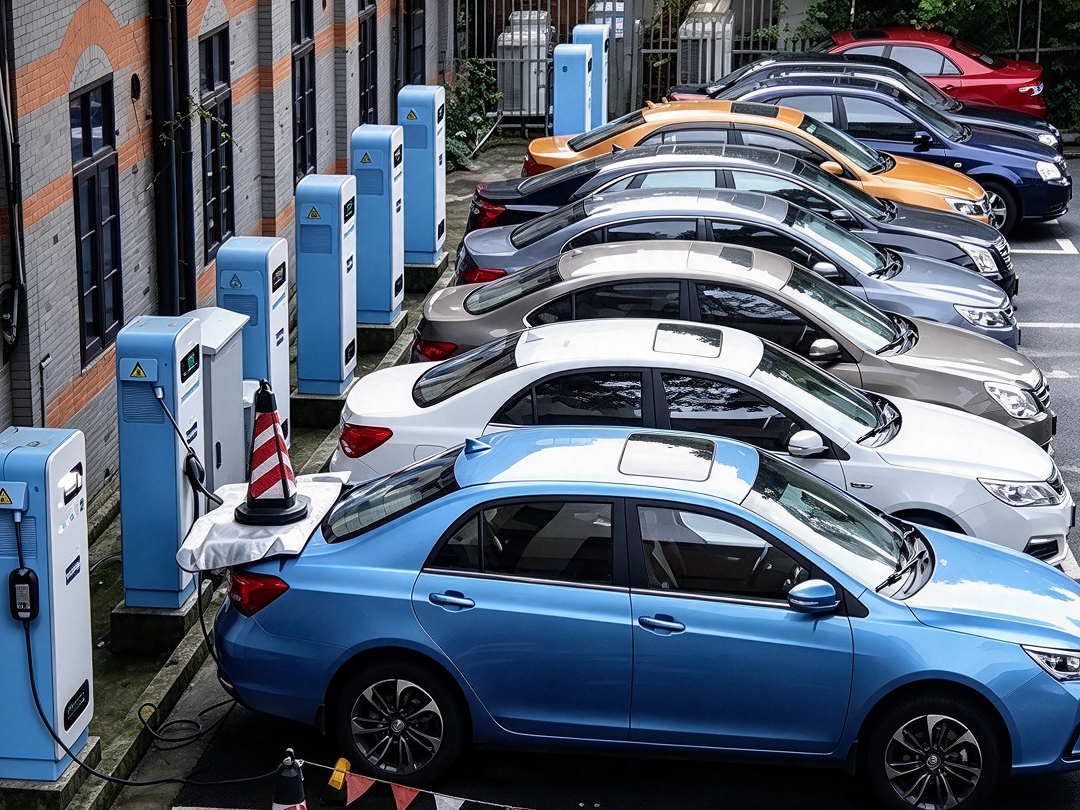
Around October 2026, claims that EVs would have to pay a road maintenance fee spread online in China. The rumored "10-province pilot at 0.12 yuan per kilometer" was denied by local tax authorities. No national policy had been introduced requiring private EV owners to pay a uniform road fee or mileage tax. Yet the rumor spread quickly because it touched a real issue: as EV ownership rises, the fuel-tax model that has funded road maintenance for seventeen years is losing its base, and EV development has entered an unavoidable phase of cost re-pricing.
China’s ordinary highways need about 600 billion yuan a year for maintenance, while the fuel consumption tax contributes only 150–180 billion yuan—a gap of more than 50%. In the first half of 2026, NEVs accounted for nearly half of new vehicle registrations, and the national NEV parc exceeded 43 million. Meanwhile, the net increase in fuel-vehicle ownership fell from 6.01 million in 2024 to just 430,000 in 2025. The tax base is not shrinking slowly; it is drying up fast. Weight makes the fairness problem sharper: EVs in the same class are generally 30–50% heavier than fuel vehicles, and mainstream models exceed two tonnes. Road damage is closely tied to axle load, so heavier vehicles traveling the same distance bypass the maintenance cost-sharing link simply because they do not burn fuel. The debate over "who uses the road, who pays" becomes harder to avoid.
For the auto industry, this is not a distant fiscal issue but a direct constraint on product strategy. EV competition has rewarded bigger batteries, longer range, and larger bodies. From Shock Absorber and Accessories, Rubber Component, Plastic Component to Stamping Parts, cumulative weight has pushed up vehicle mass. Once road-use charges are linked to weight and mileage, vehicle weight will become a visible annual cost, not just an energy-consumption figure. Chinese experts expect a "commercial first, private later" path: ride-hailing, electric freight, and buses have high mileage and verifiable data, so they are likely to be charged first; private cars may get an annual tax-free mileage allowance or a transition period. Hainan’s metered charging for NEV commercial vehicles, while private green-plate cars remain excluded, reflects this logic. The technical basis—BeiDou positioning, vehicle connectivity, and OEM data platforms—is largely ready. The real challenge is institutional: avoiding a double burden on fuel vehicles and EVs, protecting low-frequency users, and ensuring revenue is used for road maintenance.
The key signal is not a rumored rate. It is that the implicit subsidy of "unpriced road use" for EVs is ending. Future competitiveness will depend not only on battery size and range, but on whether every kilogram of weight and every kilometer traveled can withstand cost accounting. For automakers, this is a design constraint to build into product planning—not a PR problem to fix after policy lands.

October 19, 2026
Email to this supplier
October 19, 2026

Privacy statement: Your privacy is very important to Us. Our company promises not to disclose your personal information to any external company with out your explicit permission.
Fill in more information so that we can get in touch with you faster
Privacy statement: Your privacy is very important to Us. Our company promises not to disclose your personal information to any external company with out your explicit permission.